
Local Massachusetts delivery


Home Medical Equipment Safety
Home medical equipment can make everyday care, mobility, comfort, and accessibility easier—but it also becomes part of the environment where someone lives.
A hospital bed changes how a bedroom is arranged. A mobility scooter needs space to maneuver and charge. Oxygen equipment requires special precautions. A ramp or stair lift becomes part of how someone enters or moves through the home.

Start With the Right Equipment and Setup
Safety begins before the equipment is ever used.
The equipment should be appropriate for the person, fit the home, and be configured according to its intended use.
Before choosing equipment, consider:
Who will be using it?
Will a caregiver also need access to it?
Where will it be placed?
Is there enough room to operate it properly?
Does it need access to electrical power?
Are there stairs, narrow doorways, rugs, or other obstacles nearby?
Are there weight, size, positioning, or other specifications that need to be considered?
Has a healthcare professional provided requirements or recommendations?
If you're unsure which equipment or features you need, Prosperity Health can help explain the available options. Medical and therapeutic decisions should be made with the appropriate healthcare professional.
Keep the Area Around Equipment Clear
One of the simplest safety measures is also one of the most important: give the equipment enough room.
Furniture, electrical cords, rugs, clutter, and other objects can interfere with equipment or create tripping hazards for the person using it or a caregiver.
Depending on the equipment, consider maintaining:
A clear path to and from the equipment
Space for caregivers to assist
Access to controls and accessories
Room for powered or adjustable parts to move
Clear access to electrical outlets
Enough maneuvering space for wheelchairs or scooters
Unobstructed entrances and exits
This is especially important when bringing larger equipment into a home that wasn't originally arranged around mobility or caregiving needs.
Follow the Manufacturer's Instructions
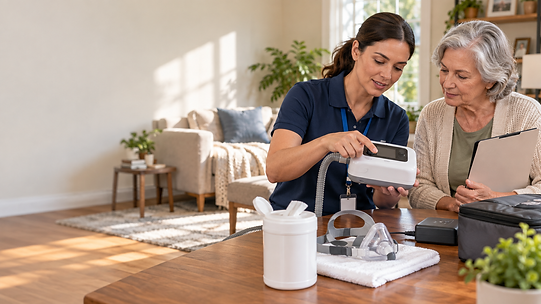
Different products have different operating, cleaning, maintenance, charging, and safety requirements.
Always review the instructions provided with your specific equipment rather than assuming that one product operates the same way as another.
Pay particular attention to guidance regarding:
Weight and size limitations
Electrical requirements
Charging

Hospital Bed Safety at Home
Home hospital beds have moving and adjustable components, so proper placement and operation matter.
Before and after setup:
Keep the area around the bed clear
Make sure cords aren't creating a tripping hazard
Leave appropriate room for caregivers
Learn how the bed's controls and adjustments operate
Understand how applicable rails and accessories are intended to be used
Power Wheelchair & Mobility Scooter Safety
Powered mobility devices introduce movement, batteries, charging equipment, and maneuvering considerations into the home.
Users and caregivers should understand the device's basic controls before use.
Consider:
Available maneuvering space
Doorways and thresholds
Rugs and other floor obstacles
Indoor versus outdoor use
Battery and charging instructions
Storage
Slopes and changes in elevation
The manufacturer's operating limitations
A device appropriate for one environment isn't necessarily appropriate for another. Follow the manufacturer's instructions regarding where and how a particular wheelchair or scooter should be operated.
Oxygen & CPAP Equipment Safety
Respiratory equipment requires particular attention to both equipment instructions and medical guidance.
For oxygen equipment, keep oxygen away from flames, smoking, sparks, and other ignition sources, and follow all manufacturer and supplier instructions regarding placement, storage, and use.
Do not change prescribed oxygen flow rates or other therapy settings without direction from the appropriate healthcare professional.
CPAP and BiPAP users should follow applicable instructions for setup, cleaning, masks, tubing, humidifier components, and replacement supplies. Therapy settings should follow the prescribed treatment plan.
If you have a medical question about oxygen or sleep therapy, contact your healthcare provider.
Wheelchair Ramp Safety
A ramp needs to work with the entrance, the mobility device, and the person using it.
Factors such as rise, available space, configuration, landings, surface conditions, and the type of wheelchair or mobility device can all affect the appropriate solution.
Portable and threshold ramps should only be used as intended by their manufacturer. Larger modular ramp systems require proper configuration and installation for the property.
Keep ramp surfaces and access paths clear and pay attention to changing outdoor conditions that could affect safe use.
Stair Lift Safety
A stair lift should be appropriate for the staircase and professionally installed.
Straight and curved staircases can require very different equipment. Once installed, users should understand the basic controls and applicable safety features before operating the lift.
Follow manufacturer instructions regarding:
Entering and exiting the seat
Seat belts or other included safety features
Folding components
Obstructions on the stairs
Weight limitations
Controls
Frequently Asked Questions About Home Medical Equipment Safety
Will Prosperity Health show us how the equipment works?
For applicable equipment, our team can demonstrate basic operation and controls as part of delivery and setup. Always keep and follow the manufacturer's complete operating and safety instructions.
What should I do if equipment doesn't seem to be working correctly?
Stop using equipment if you believe continued operation could be unsafe. Review the manufacturer's instructions and contact Prosperity Health or the appropriate manufacturer or service provider to determine the next step.
Can Prosperity Health tell me whether equipment is medically safe for someone to use?
Prosperity Health can explain equipment options and basic operation, but medical suitability should be determined with the appropriate healthcare professional.
Should caregivers be present for equipment delivery?
When possible, it can be helpful for someone who will regularly assist with the equipment to understand its basic operation and ask questions during setup.
What should I do before medical equipment arrives?
Prepare the intended location and delivery path. Depending on the equipment, that may include moving furniture, clearing hallways, checking dimensions, making outlets accessible, and providing information about stairs or entrances.


Still Have a Question?
You don't need to understand every equipment type, feature, rental term, or measurement before contacting us.
Tell us what's going on, what equipment you're looking for, and where you're located. We'll help you understand the available options and the practical next steps.
Prosperity Health is a self-pay provider and does not currently bill or accept Medicare, Medicaid, Medicare Advantage, or private health insurance.